Când e timpul să privești înapoi pentru a merge mai departe
Vineri, 20 martie, ultima zi a mobilității Finding My Future de la București, a avut un cu totul alt tempo față de zilele precedente. Nu pentru că ar fi fost mai puțin importantă — ci pentru că importanța ei era de alt fel. O zi fără sesiuni tehnice, fără exerciții structurate, fără sarcini de îndeplinit. O zi lăsată, deliberat, în seama reflecției.
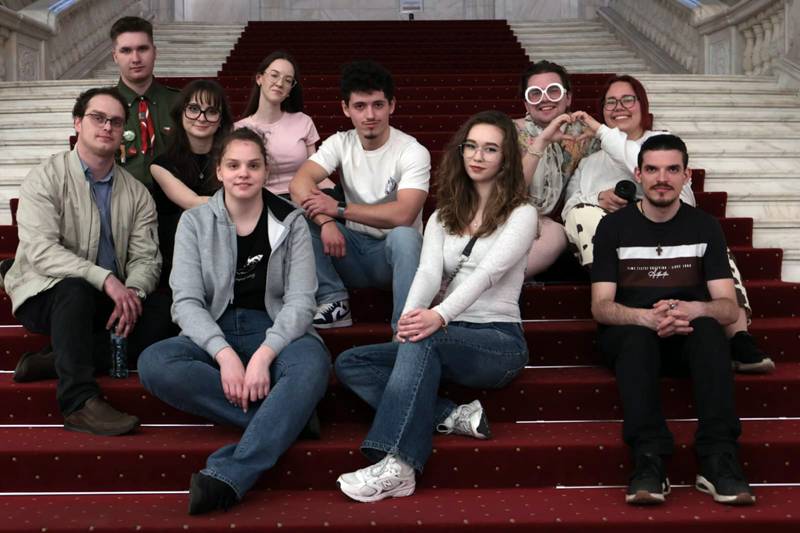
 Cei 28 de participanți din România și Polonia s-au adunat pentru ultima oară ca grup, într-un spațiu în care agenda oficială a cedat locul unui lucru mai dificil și mai valoros: să stai cu experiența pe care tocmai ai trăit-o și să îi dai un nume.
O săptămână întreagă de activități intense — ice-breakere, sesiuni despre valori și ascultare activă, peer review de CV-uri, brand personal, interviuri față în față cu profesioniști, materiale video, certificate Youthpass — s-a condensat în această ultimă dimineață într-un singur gest colectiv: întoarcerea privirii.
Participanții au împărtășit ce au simțit, ce au descoperit despre ei înșiși și ce duc acasă. Nu ca raport de evaluare, ci ca mărturie sinceră a unui traseu parcurs împreună. Iată câteva dintre vocile care au răsunat în sala de final.
Aflăm de la Denis:
Location: Complex sportiv Studentesc Tei
Participants: 30
Main Objective:Building team synergy, personal introduction, and defining project expectations.We kicked off the first day at 10 AM with a series of team discussions centered around some key questions. This allowed us to break the ice and start understanding the different perspectives within the group right from the start.
To add a sweet twist to the introductions, we used a „Candy Color” challenge. Each of us picked a colored candy, and depending on the color chosen, we had to answer a specific question about ourselves. It was a fun, interactive way to move past the surface level and really get to know the people we’ll be working with.
In the afternoon, the energy shifted with a team challenge. We were split into 4 teams and had to navigate through 9 different trials, such as taking different photos in different locations through the campus, solving riddles, puzzles, and much more. These probes tested our coordination and speed, serving as a perfect start for our teamwork skills.
To keep the energy going on, we had an energizer session in the afternoon, in which we had to get in a circle and clap our hands and those who got out of the sync got eliminated. It was good exercise and laughing break that completely reset the group’s focus for the more serious parts of the day.
In the second part of our day we sat down to discuss:
Contributions: What each of us brings to the table.
Expectations:What we hope to achieve by the end of this week.
Fears:Addressing the challenges we are nervous about.Afterwards we concluded the day by being assigned to our permanent teams for the entire week. But not before discussing about the 4 kinds of personalities . To sum it up, this structure gives us a solid foundation to build upon as we dive deeper into the project’s goals.
Weronika preia legătura și ne spune:
Active listening
True listening requires several important things.
The best recipe for full and clear meaning is:
Words + tone + body languageIntrinsic elements of active listening are:
– critical thinking,
– problem solving.Listener ecosystem:
– what happens (the outcome)
– what you do (the action)
– how you think (the foundation)Most people hadn’t used active listening when we were in rush when building a tower. There was a lot of communication but there was no time for active and carefully listening. The responds were short and fast.
So the conclusion after this task is: it’s difficult to use active listening during situations like this, but it isn’t impossible. Weronika
Iată acum ce a notat Zofia:
The classes began at 9:00 a.m. As an introduction, a lecture in the form of a presentation on the art of active listening was delivered. After the course participants had learned the theory, practical tasks were started. The first task concerned the use of active listening during conversation and was carried out in two parts. After pairing up, one person spoke—most often talking about their experiences or telling a story—while the other person listened. After 5 minutes, there was a switch.
The second theoretical task involved building a tower using only sheets of paper. The winning group was the one that managed to build the tallest structure. After the task, there was a moment of reflection. After the break, participants played an integration game called “pif-paf,” which was intended to stimulate further activity.
Next, a lecture on CVs and the use of soft and hard skills began. The structure of writing a CV was discussed. After the lecture, each participant prepared one example sentence concerning their accumulated competencies from work or volunteering. Then a lunch break began.
After lunch, the last part of the classes began, which concerned the Circle of Life. The concept of the wheel of life was introduced, which, depending on the way it is divided, describes different aspects of life. It started with individual work answering the question about the eight most important aspects of young people’s lives. Then participants moved to working in pairs and exchanging opinions, with the aim of developing a common list. Next, following the same scheme, participants were grouped into teams of four and developed a new list. In the final stage, a list was created consisting of the opinions of all groups and all participants.
Based on this, each participant individually prepared a pie chart consisting of the eight jointly established aspects of a young person’s life. Participants were asked to fill it in based on their own level of satisfaction. An important element of the lecture was the harmonization of different levels and aspects of work in order to draw attention to those aspects that prompt reflection on the validity of assessments and their justification.
Theory on learning methods was also presented. The method of David A. Kolb consists of four cycles: experience, reflection, theory, and practice. Later, participants divided into groups. One group learned how to fold an origami boat, while the other learned sailing.
Maja notează:
Insightfull:
Today’s session focused on deepening our understanding of how to present ourselves professionally, both on paper and online. Building on the previous day, we continued working on our CVs, starting with an analysis of Andreea’s example. Using the questionnaire guidelines, we reviewed several CVs from within the group, identifying strengths as well as areas for improvement. This practical exercise helped us recognize common mistakes and better understand what makes a CV clear, relevant, and impactful.
We then applied these insights by rewriting parts of our own CVs. Sharing our progress in pairs, guided by targeted questions, allowed us to reflect not only on the content but also on how we communicate our experiences and skills.
After the break, the focus shifted to our digital presence and self-perception. Divided into three groups-those being researched, those acting as recruiters, and those researching themselves-we explored how personal and professional identities are perceived online. Through questions about reliability, hobbies, professional experience, and core values, we compared self-perception with external perception. This exercise highlighted how easily online information can support or undermine our professional image, and emphasized the importance of consistency between who we are and how we present ourselves.
We then came together to evaluate our findings, gaining diverse perspectives and constructive feedback.
Later, we discussed Herzberg’s motivation-hygiene theory, reflecting on what drives motivation at work and what factors can diminish it if neglected. Importantly, we considered our own responsibility as employees in maintaining both motivational and hygiene factors, recognizing that sustained motivation requires ongoing awareness and effort.
Finally, we shared experiences with job interviews and preparation strategies, which naturally led to tomorrow’s task: each of us will choose a job position and participate in a model interview with youth center professionals.
Overall, today encouraged self-awareness, critical thinking, and responsibility for both our professional presentation and personal.
Denis ne spune:
Insightful:
Today’s activities took us to a specialized center. This change of scenery set a dynamic tone for the day, which was entirely dedicated to putting our professional preparation into practice through simulated job interviews.
Building on our previous work with CV, the core of the session involved sitting down with a professional who conducted a realistic interview. We were asked five questions. Also the interviewers included a deliberate „trick question” designed to test our adaptability, honesty, and ability to think on our feet under pressure. This practical simulation gave us a highly realistic sense of how a formal, CV interview actually unfolds.
Following the practical exercise, the focus shifted to feedback and professional guidance. The interviewers helped us deconstruct our performance and provided us with tips and tricks on how to successfully navigate an interview. We learned how to identify common pitfalls, what recruiters are actually looking for and how you can approach them and insist on the job more for a better chance to get accepted and also to maintain our composure to avoid failing an interview.
Overall, today was a highly practical and engaging experience and it left us much more confident and equipped with concrete, actionable strategies for our future professional endeavors.
Iar Teo completează:
Report of the Day
9:00 – We gathered together at and we took the public transport to the YOUTH Center for the practical activity of interviewing simulation
– 10:30 – They introduced us to the objective of the day and then we’ve been seperated into our fields of interest
– 13:00 – The interviews went smoothly but challenging and in the end we enjoyed the final insights from the interviewers and the job fair
– 14:00 – We had lunch and after we seperated our group between the Parlament tour and going back to the Hotel
– 18:00 – Half of the participants enjoyed the experience of walking inside the Parlament…
and the others made Pancakes
Și Maja are cuvântul:
Even though today classes were shorter than the other days, it still allowed us to learn new things and reflect on what we’ve done so far.
We started with an exercise where, sitting in pairs, we were tasked with getting the person in front of us to open their fist. As it turned out, this was a method of non-formal education. Through it, we learned how it works and how we can apply it in everyday life.
Next came time for reflection. We thought about what we had achieved and what we had learned. We did this both through activities like filling out paper sheets with colors corresponding to our feelings and a quiz, as well as by taking a moment to analyze the past few days and share our conclusions.
After lunch, with our bellies full, we’re taking advantage of what Bucharest has to offer and getting ready for an evening get-together.
Mobilitatea Finding My Future nu s-a terminat pe 20 martie. S-a terminat în momentul în care fiecare participant a trecut pragul spre casă cu ceva ce nu existase o săptămână înainte — metode noi, conexiuni reale și, poate cel mai important, o perspectivă diferită asupra muncii pe care o fac zi de zi cu tinerii lor.
Finding My Future este finanțat prin programul Erasmus+ al Uniunii Europene, în cadrul acțiunii KA210-YOU — Parteneriate la scară mică în domeniul tineretului.


